Blog

Automatic Photo and Video Logging System for Railcar Weighing
Blog28 March 2018

Automatic Photo and Video Logging System for Railcar Weighing

Accounting for cargo carried by rail is of major importance for the correct operation of rolling stock, for traffic management and for commercial settlements.

This is critical when transporting hydrocarbons and liquefied automotive and domestic gas, where it plays a significant role in determining their price. Providing such accounting requires railcar scales with automated systems and the corresponding software. The railcar scales in use today convert the action of gravity into an electrical signal - that is, strain-gauge scales. When carrying out the weighing procedure, it is important to log the process by photo or video.

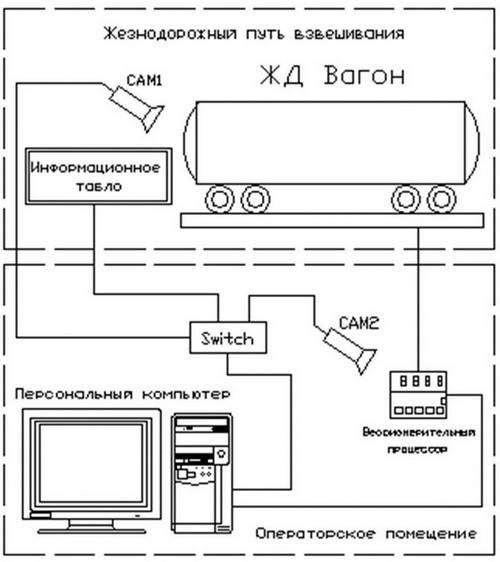
Setting up the photo and video logging system. The following equipment is required: an outdoor IP video camera, a standard IP video camera, an information (LED) display board, a switch with Power over Ethernet, a weight indicator and a personal computer. All components are connected to the computer via standard interfaces and protocols.

The key problems in building such a system are: failure to observe the speed limit when positioning railcars; increased stabilisation time for half-empty railcars carrying liquid cargo (less than 70% full); poor maintenance of the platform; a control room located more than 400 metres away; the inability to check what the display board shows; and the difficulty of reading the railcar number because of dirt, varying background colours and numerous technical markings.

Photo and video logging of the weighing process helps to solve these problems. The task of recognising the railcar number is handled by recognition algorithms working on images with a resolution of 1920×1080.

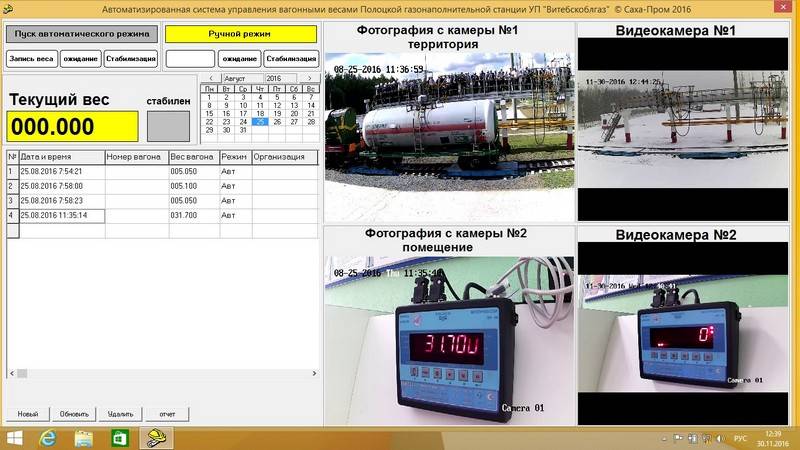
The software. The software provides weighing logging in both automatic and manual modes through an intuitive interface. Its capabilities include: complete registration of the weighing operation, maintenance of an archive, real-time display and analysis of data, automatic calculation of tare and net weight, generation of an information record for every weighing (number, date, time, railcar number, mass, cargo type, organisations involved), linking of photographs to the record, and the generation and storage of reports.
Automatic Photo and Video Logging System for Railcar WeighingAutomatic Photo and Video Logging System for Railcar Weighing
Types of Railcar Scales: Advantages and Disadvantages
Blog8 September 2016

Types of Railcar Scales: Advantages and Disadvantages

When choosing railcar scales, buyers face considerable variety - every manufacturer has its own particular features. Below is a classification of railcar scales together with their main advantages and disadvantages.

By operating principle: mechanical (no longer manufactured) and electronic - scales that predominantly use strain-gauge load cells.

By application: for industrial plants receiving and shipping cargo (static scales for low throughput, static-dynamic scales for throughput above 15 railcars per day); and for railways - scales installed on main tracks to check for overloading, with a continuous rail that does not limit transit speed to 15 km/h.

By weighing method: static (the most accurate, for commercial accounting), static-dynamic (both at standstill and in motion at up to 10-15 km/h, saving time on shunting) and dynamic (in motion only, for process accounting).

By structural design: foundation-mounted (requiring a reinforced-concrete foundation, with installation taking about 2 months), precast reinforced-concrete (installation in 3-5 weeks) and foundation-free (the current generation, installed in 2-3 working shifts).

By electronics type: analogue strain-gauge systems (a single channel for all load cells) and digital systems (a separate channel for each load cell, which simplifies diagnostics and the determination of centre-of-gravity offset). Scales are also classified by railcar type and track gauge.

VTV-1STB Foundation-Free Railcar Scales
Blog15 July 2013

VTV-1STB Foundation-Free Railcar Scales

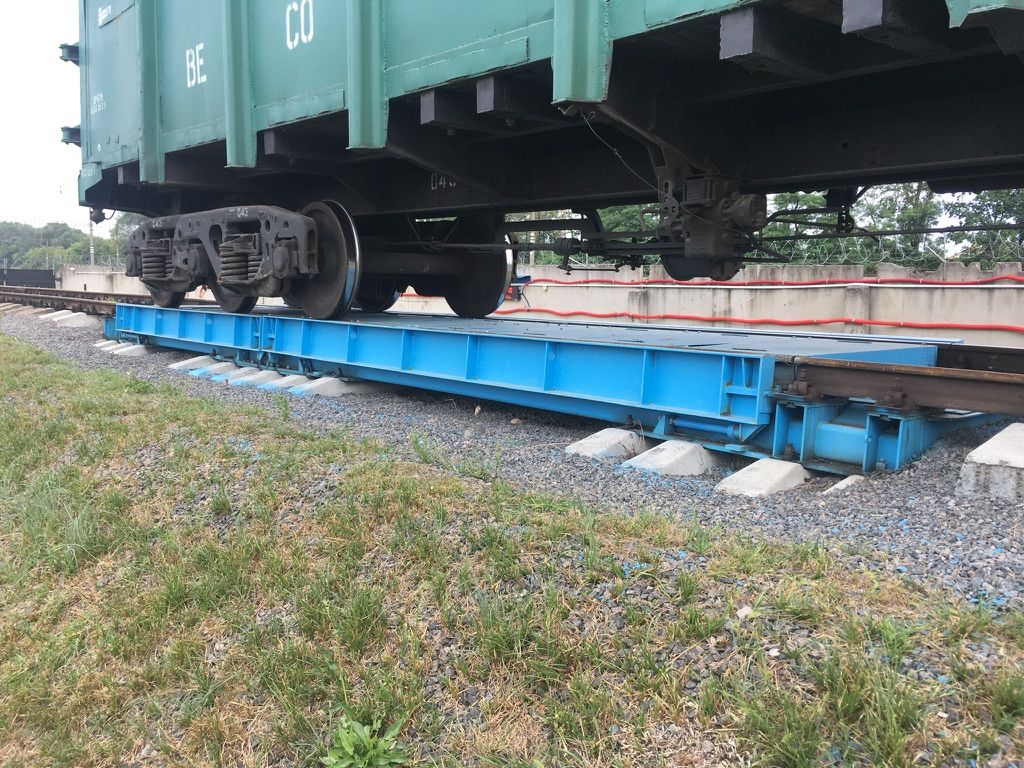
This article examines the problem of creating foundation-free scales for the static and static-dynamic weighing of railcars - an indispensable element of rail transport infrastructure.

The Pulsar-92 company started production of the VTV-1STB series of foundation-free railcar scales in May 2008. To date more than one hundred sets of scales in this series have been produced.

The advantages are: measurement accuracy matching the capability of the load cells; elimination of costly foundation construction (40-50% of the cost of the scales); and rapid installation requiring only two working shifts.

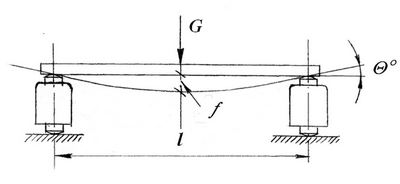
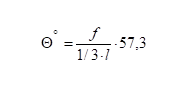
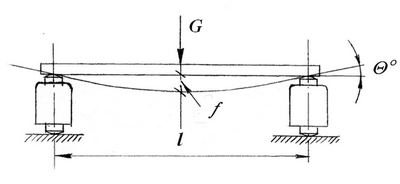
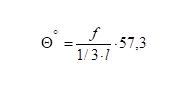
The central technical problem is maintaining load cell accuracy as the platform deflects. Heavy scales undergo considerable deformation under loads of 100-150 tonnes. Load cells with spherical bearing surfaces require strict angular tolerances (0≤Θ≤0,2°) in order to retain their metrological accuracy.

Operating experience demonstrates stable performance even where ballast settlement exceeds the track maintenance limits.

VTV-1STB Foundation-Free Railcar ScalesVTV-1STB Foundation-Free Railcar Scales
The Capabilities of Weighing Equipment
Blog15 May 2013

The Capabilities of Weighing Equipment

The primary purpose of railcar scales is to determine the mass of a railcar accurately. At least three parties to the commercial transaction have an interest in this: the consignor, the consignee and the carrier.

Checking railcar loading by weight. The VTV-1S series of twin-platform static railcar scales has been produced in various versions since 1994; it is installed at more than 200 enterprises, including more than 60 sets of scales at railway stations.

Checking loading by centre-of-gravity position. In 1998 scales able to determine the longitudinal and lateral offset of a railcar's centre of gravity were installed for the first time.

In 2002 dynamic axle-by-axle railcar scales entered service at border stations - the load cells are pressed into the rail web, which makes it possible not to restrict transit speed.

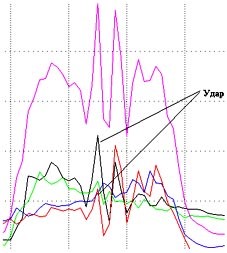
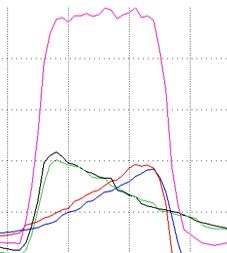
The condition of wheelset running surfaces. Running-surface defects cause impact loads proportional to the square of the speed. The multi-channel measuring system developed in 2007 makes it possible to obtain a complete "imprint" of the wheel running surface and to identify railcars with unacceptable defects.

Authors: B. L. Patsenker, Cand. Sc. (Eng.), Director of Pulsar-92 LLC; E. V. Grigorov, Executive Director of Pulsar-92 LLC.

The Capabilities of Weighing EquipmentThe Capabilities of Weighing Equipment
New Engineering Solutions in Strain-Gauge Scale Designs
Blog15 May 2013

New Engineering Solutions in Strain-Gauge Scale Designs

Weighing equipment at modern grain-processing plants and transshipment terminals is a critical part of the technological base: the accuracy and technical parameters of weighing directly affect the quantitative accounting of grain and processed products.

Traditional scale designs include a foundation that accounts for up to 50% of the total cost. Monolithic foundations are labour- and material-intensive, require 2-4 weeks of construction work and risk settling depending on the geological conditions.

In 1998 railway scales were installed on a precast reinforced-concrete foundation for the first time, which cut installation time to 3-4 shifts. Foundation-free designs appeared in the late 1970s and 1980s; their installation takes 3-4 days on a compacted crushed-stone bed.

Production of foundation-free railway scales began in May 2008. Installation requires 1-2 shifts, including replacement of the sleepers and reinstatement of the track. The scales are equipped with batching, centre-of-gravity determination, data transfer to a computer and integration with 1C.

To date more than 200 railway and 140 road weighbridges of the VTA and VTB-1SB series are in service.

New Engineering Solutions in Strain-Gauge Scale DesignsNew Engineering Solutions in Strain-Gauge Scale Designs