How it looks
Photographs from the installation
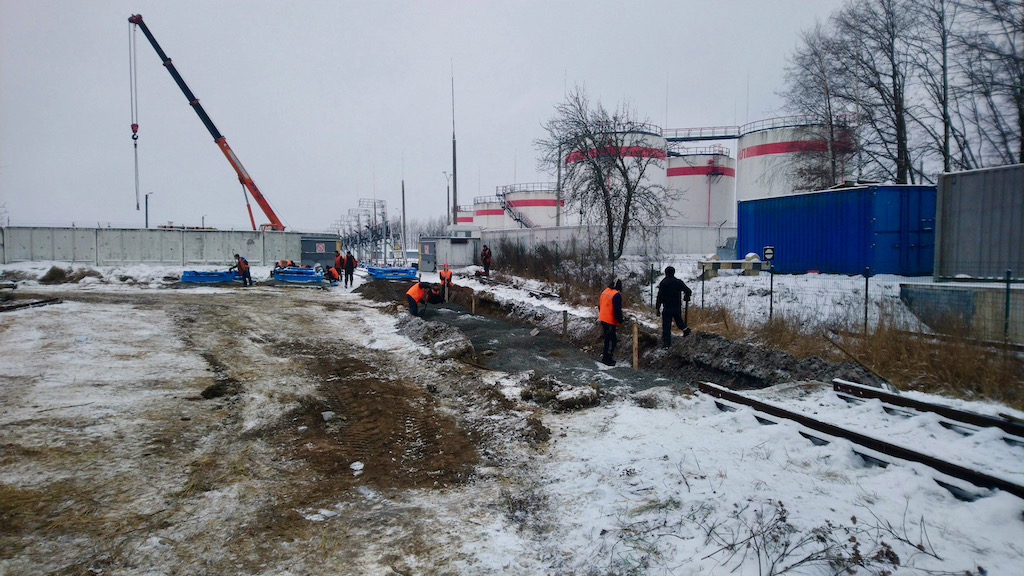
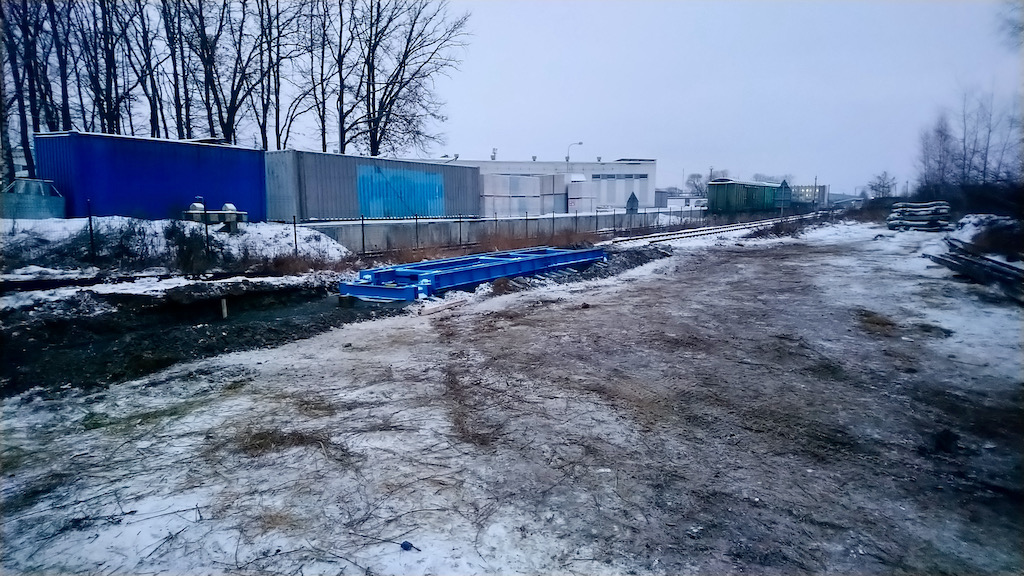
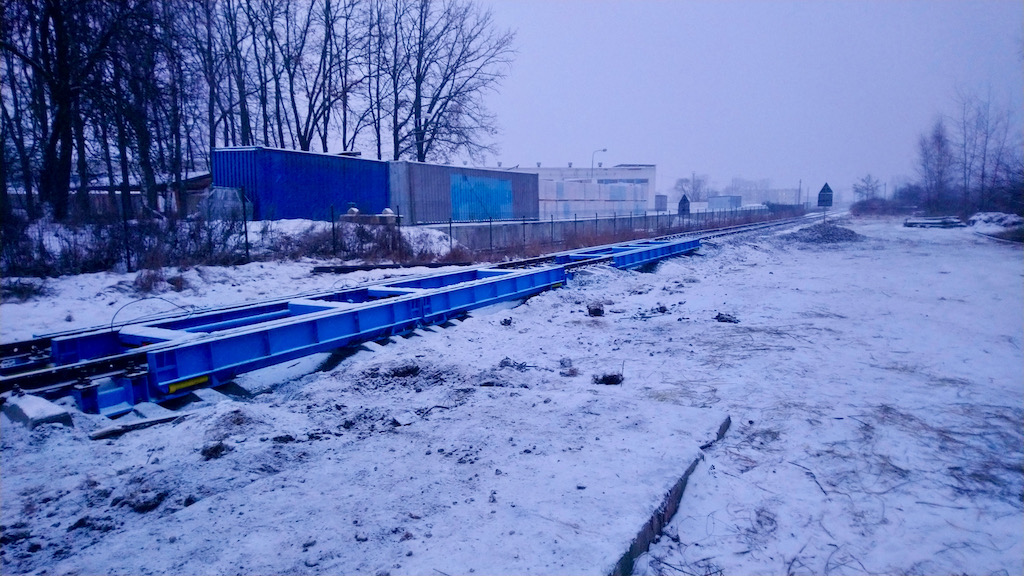
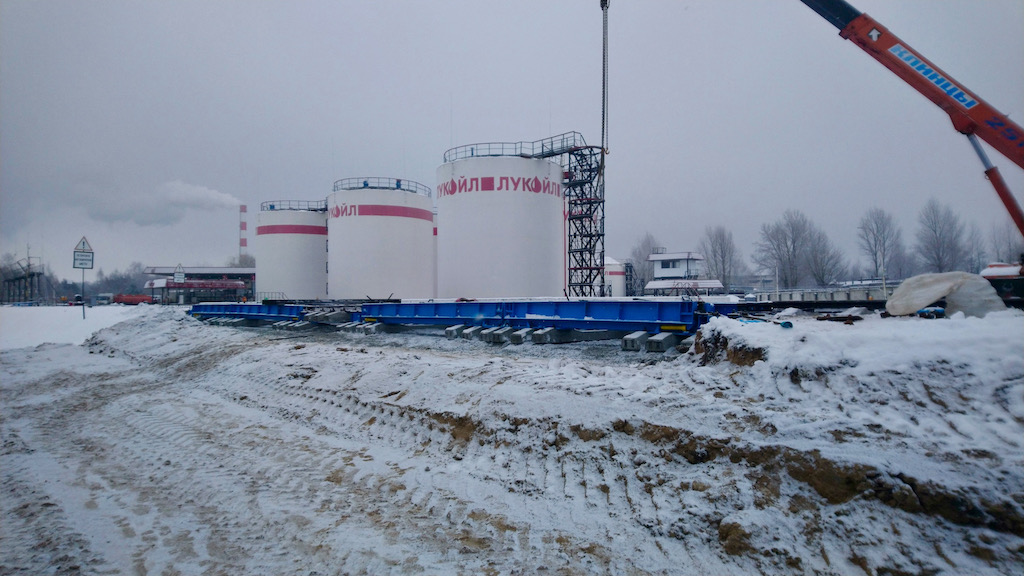
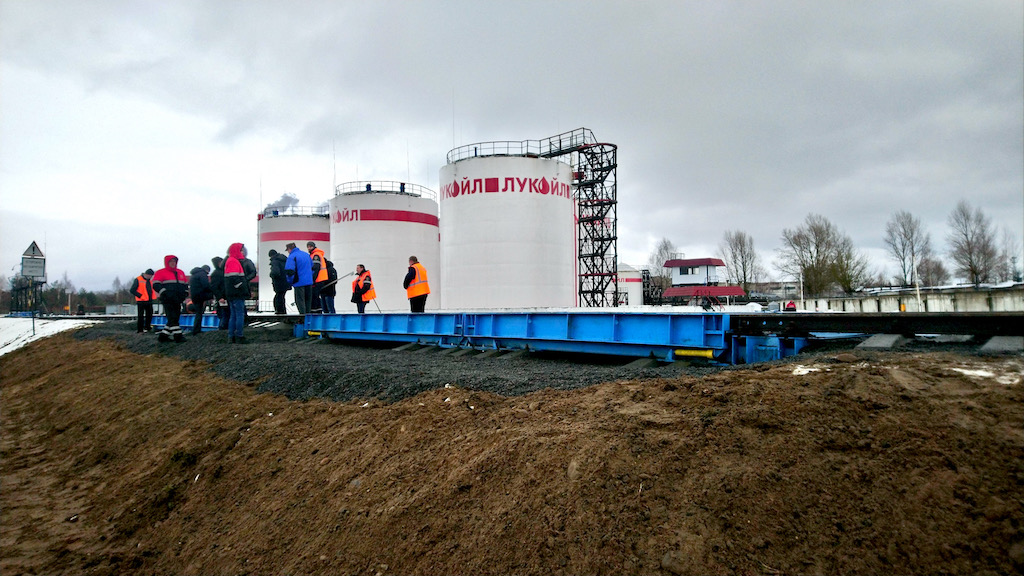
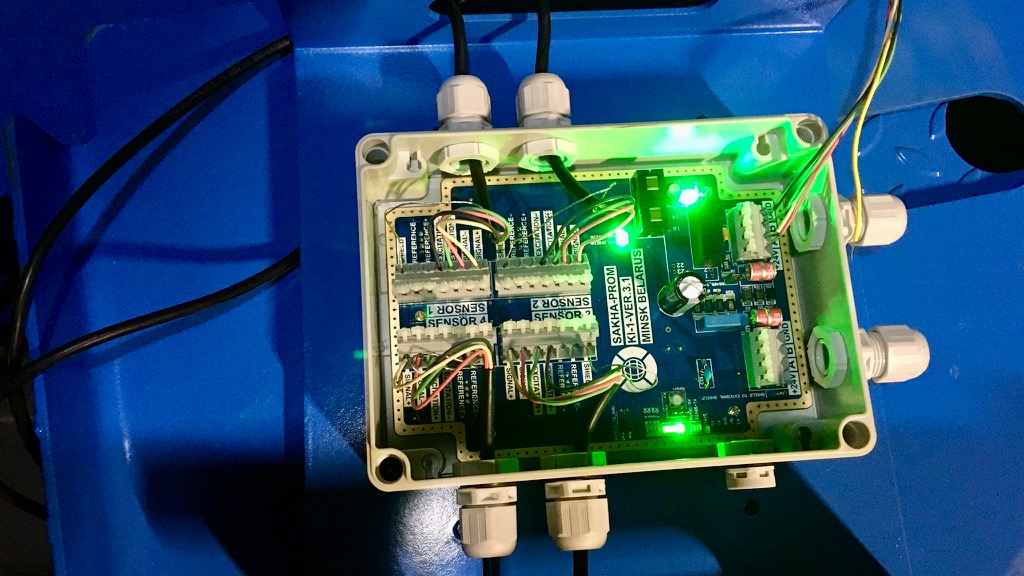
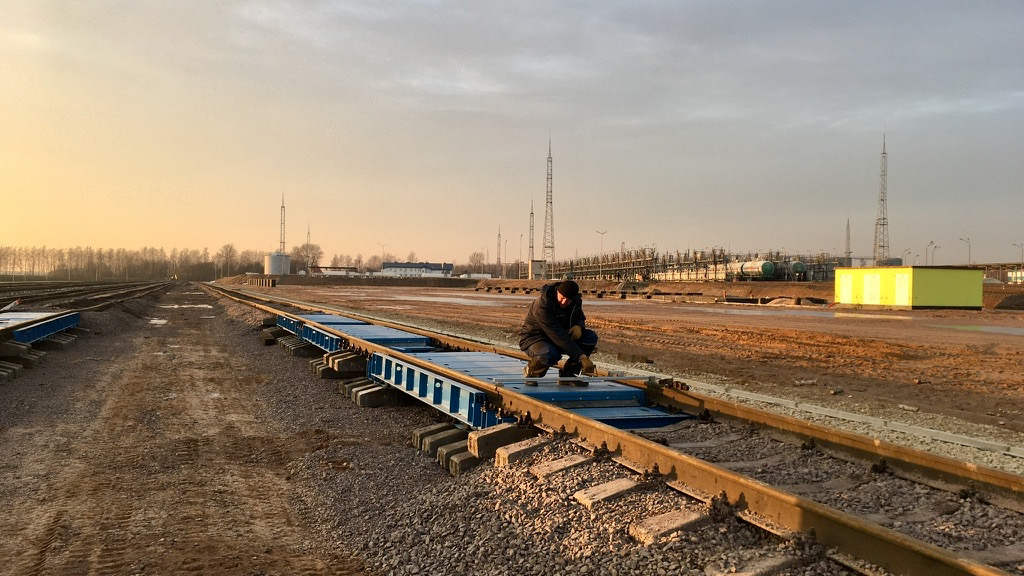
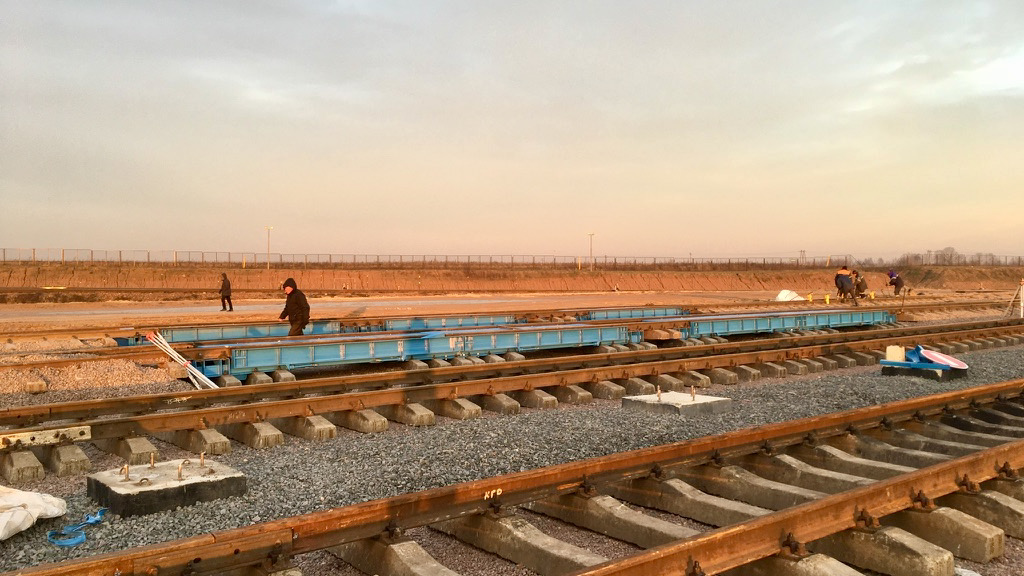
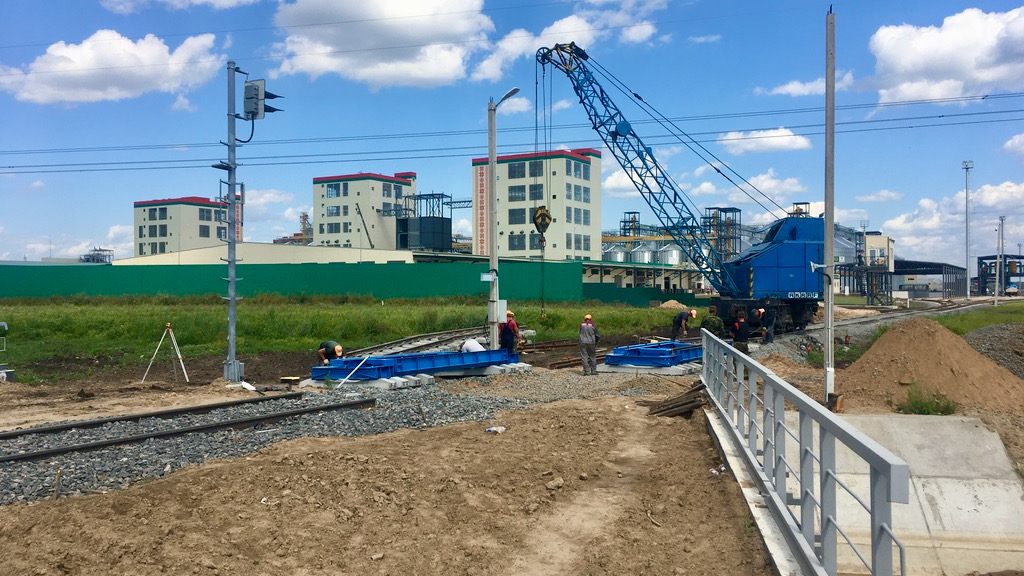
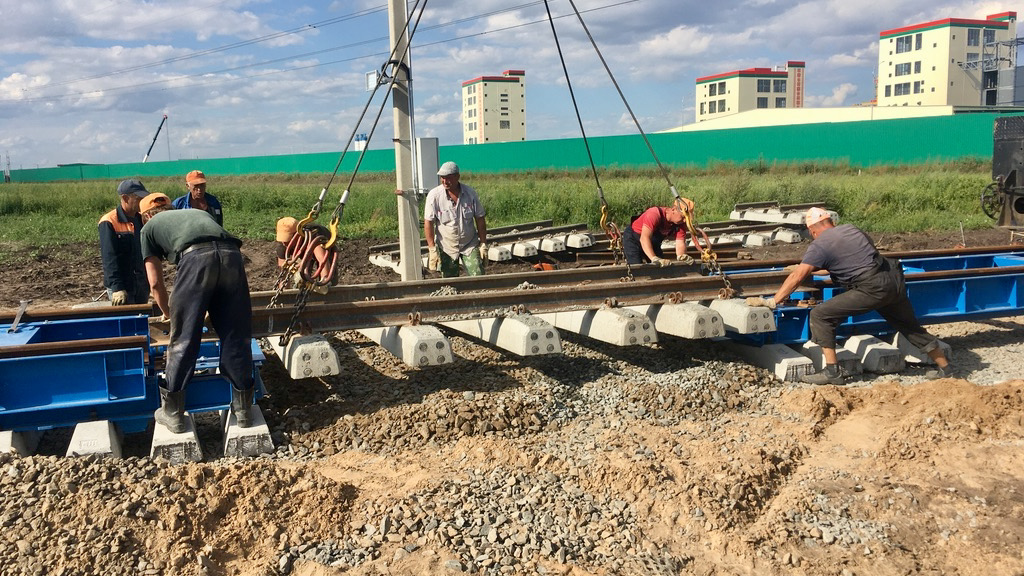
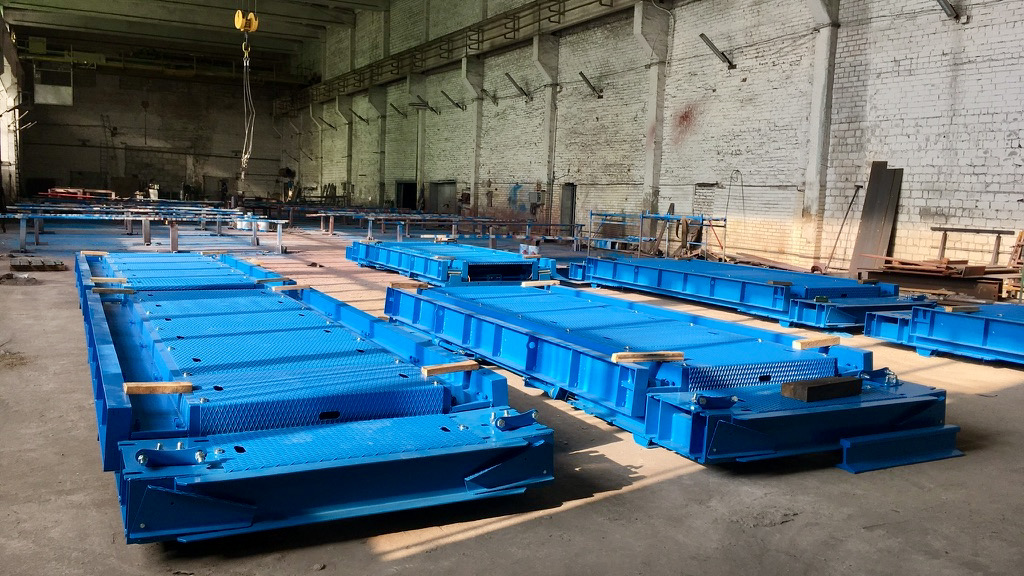
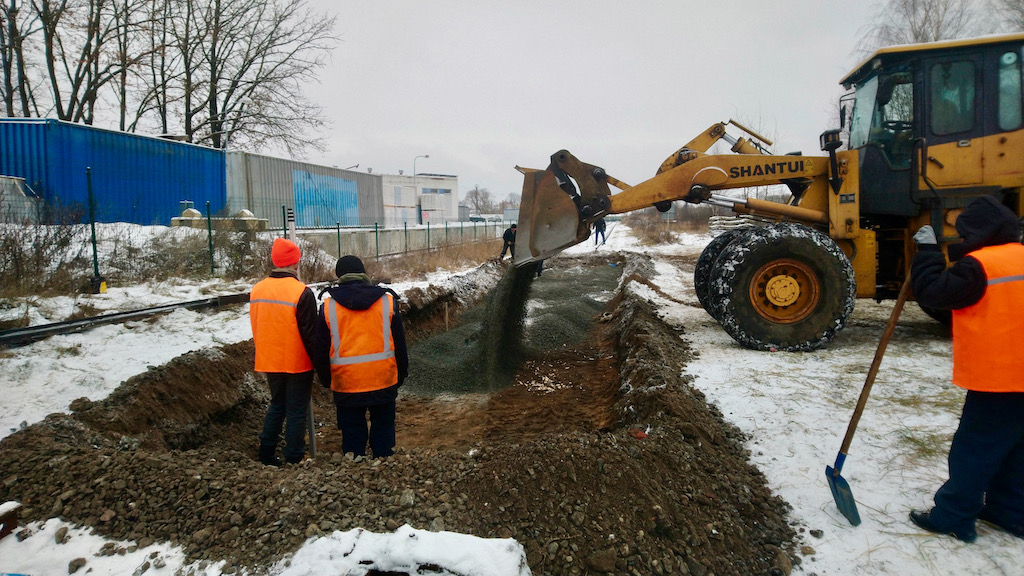
The stages of installing Modul railcar scales
Foundation-free version: a compacted crushed-stone base, with the platform set on standard railway sleepers in a 300 mm recess. Foundation-based version: a reinforced concrete foundation to the design, with or without a pit.
A permit from Belarusian Railways is obtained before work starts. The track section is normally closed for three working days — enough for dismantling, installing the modules and restoring the track.
The platforms arrive fully assembled — with load cells, stops and electronics. The modules are set to level with lifting equipment; the verticality of the load cells is checked with dedicated instruments.
The track is restored across the load-receiving platforms and the gap between them, the approaches are lined and levelled to Belarusian Railways technical conditions, and the section is handed over to the railway.
A 380 V supply is brought to the module location (needed to connect the test railcar), cable is laid from the platform to the operator room, the low-current line is run to the design, and 220 V and lighting are provided in the operator room.
The measuring controllers are already fitted inside the platforms; on site the RS485 line to the weight terminal is connected (up to 1200 m), and the terminal and the hardware-and-software system are installed.
Calibration with a test railcar, setting up the modes (static and in-motion weighing), checking the diagnostics of every load cell, configuring the software and the data transfer.
The scales are presented to the state verifier, a verification certificate is issued, the operators are briefed and the acceptance certificate is signed.