Modul WTS railcar scales

Modul railcar scales: foundation-free installation in 3 days

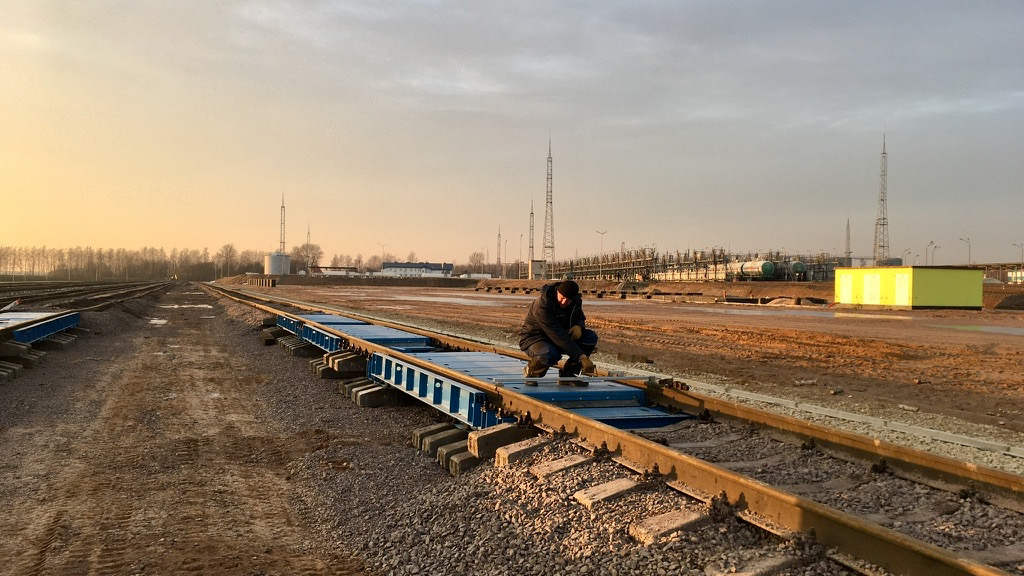
Modul WTS strain-gauge railcar scales are designed and built by Sakha-prom. They weigh 4-, 6- and 8-axle cars, at standstill and on the move, without uncoupling. Most of our scales are foundation-free and sit on reinforced-concrete sleepers; we also build scales for installation on a foundation where a site calls for it.

The steel structure, electronics, weight terminal and software are all our own design — the load cell is the only bought-in part. We handle supervised installation, commissioning, operator training and hand-over to the state verifier. In production since 2018, more than 50 projects across Belarus.

StaticIn-motion to 12 km/hAccuracy 0.5%Foundation-freeFoundation-mountedExplosion-proof
Download the questionnaireChoose a model ↓

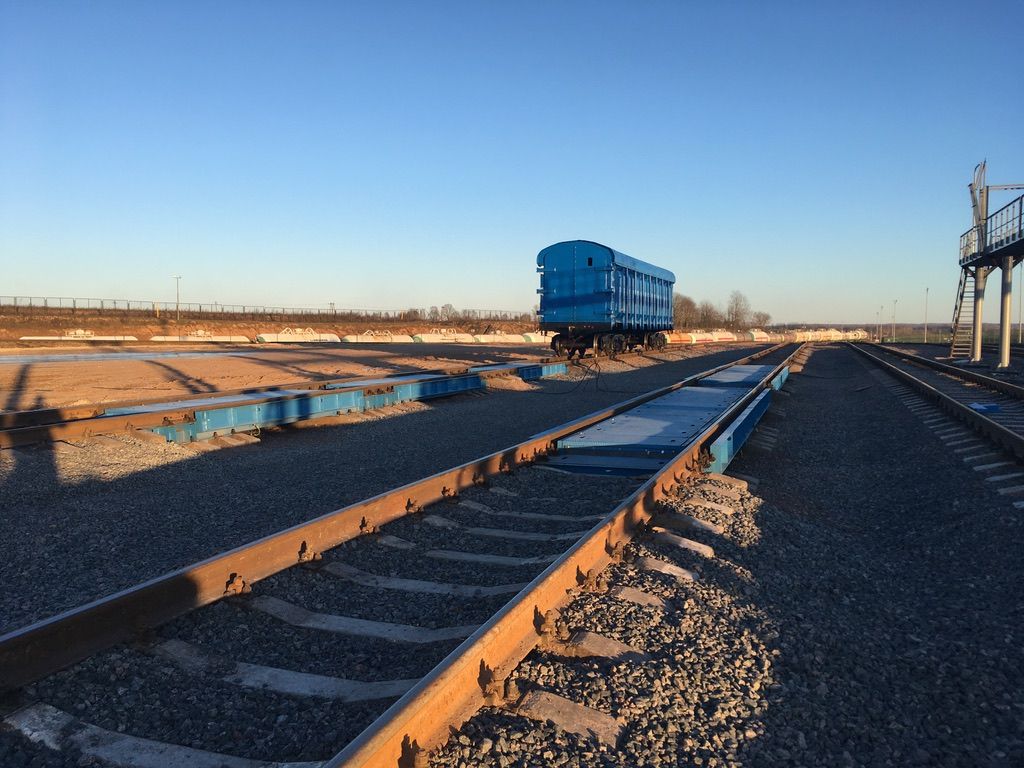
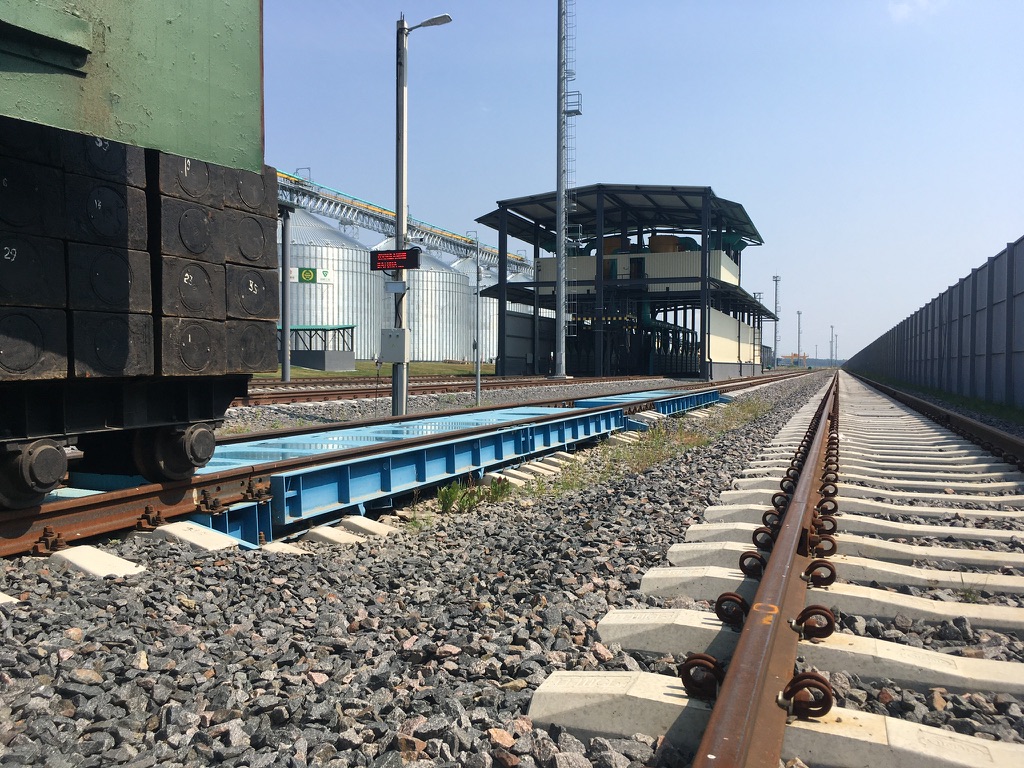
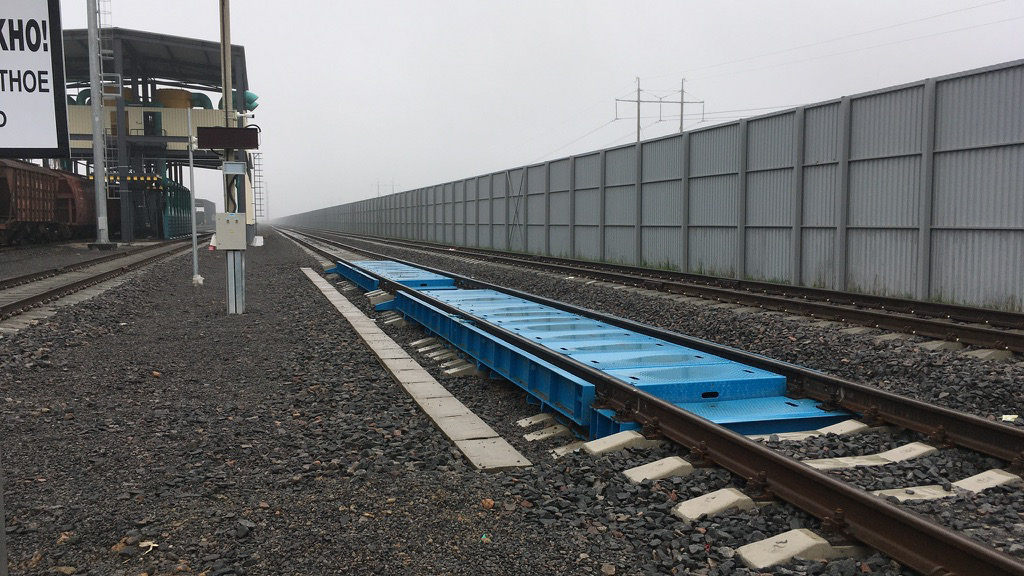
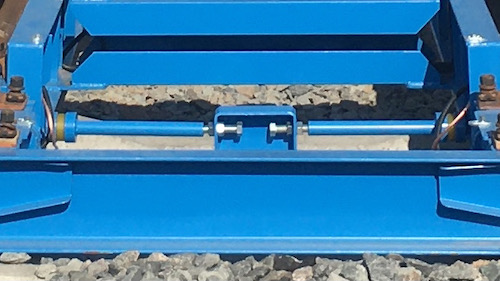
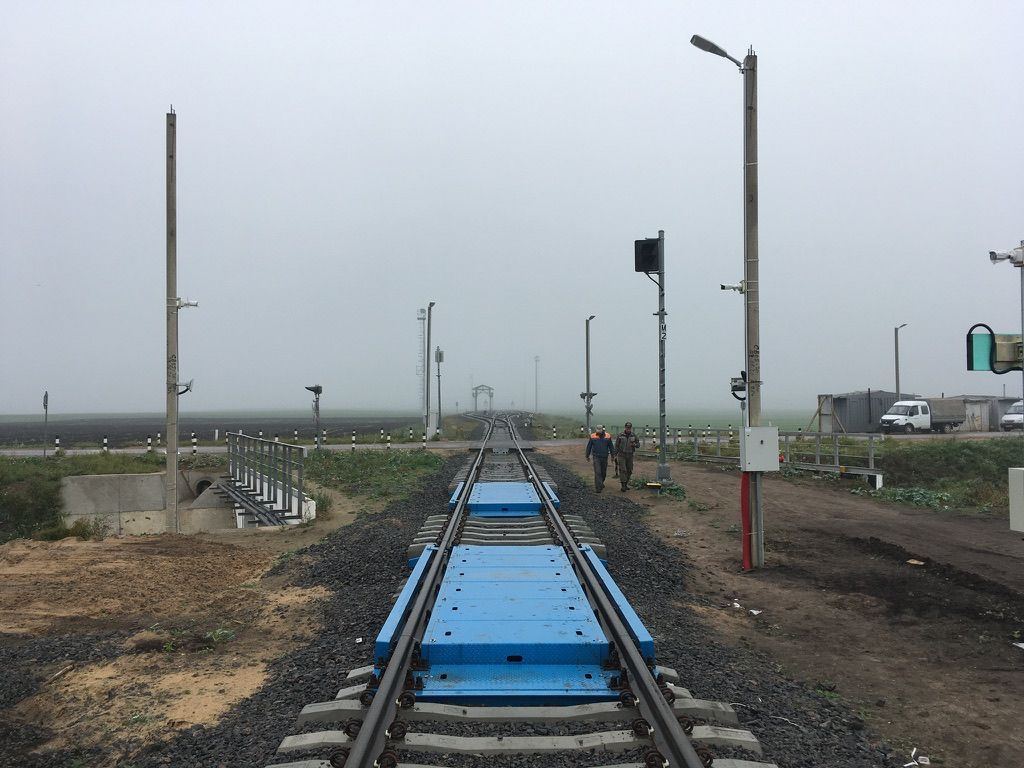
Modul railcar scales on the track
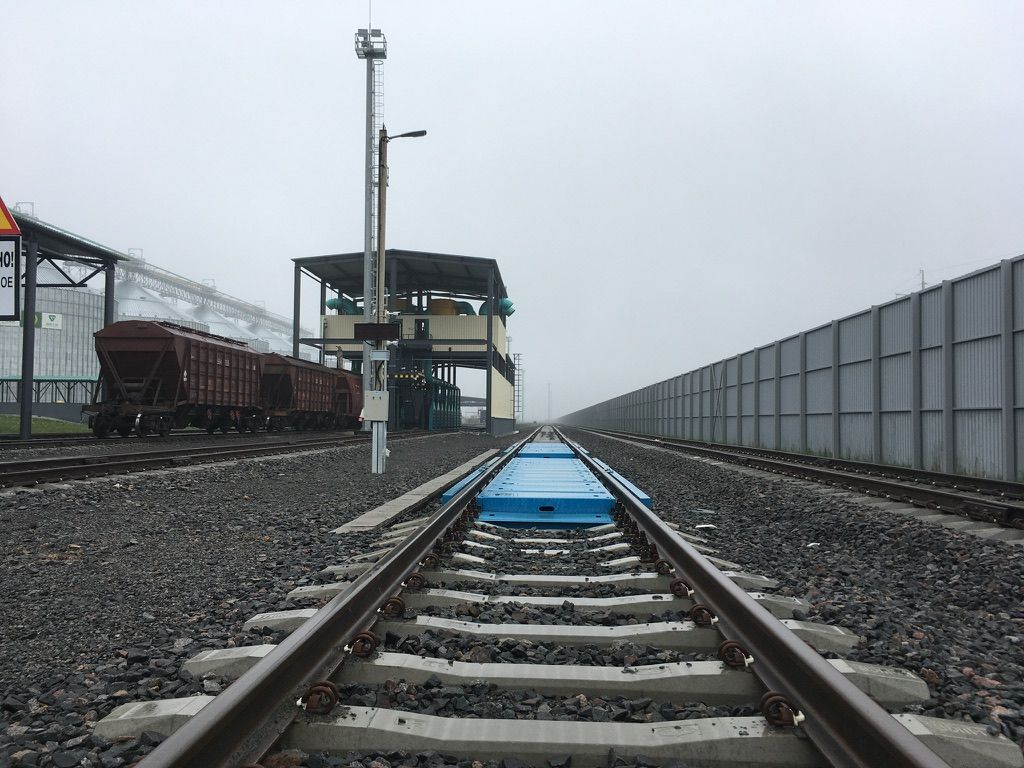
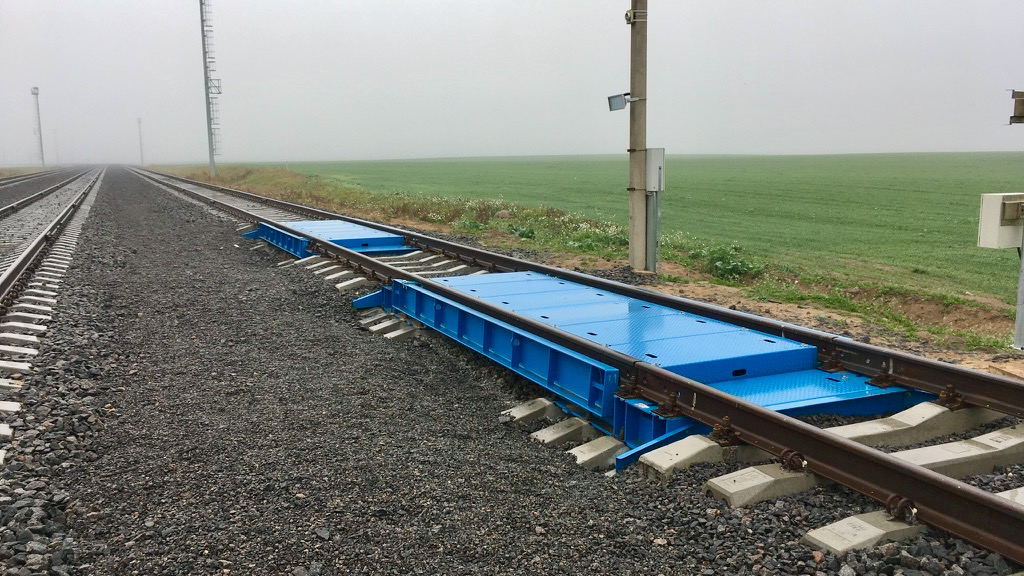
Modul railcar scales, view along the track
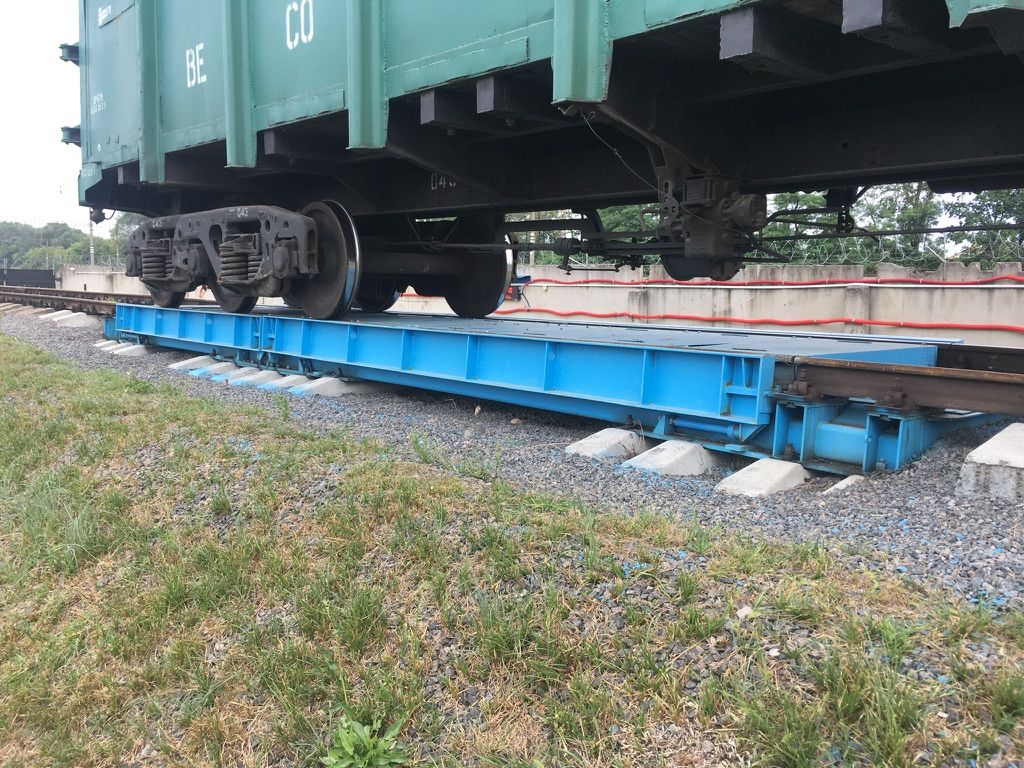
A railcar on Modul scales
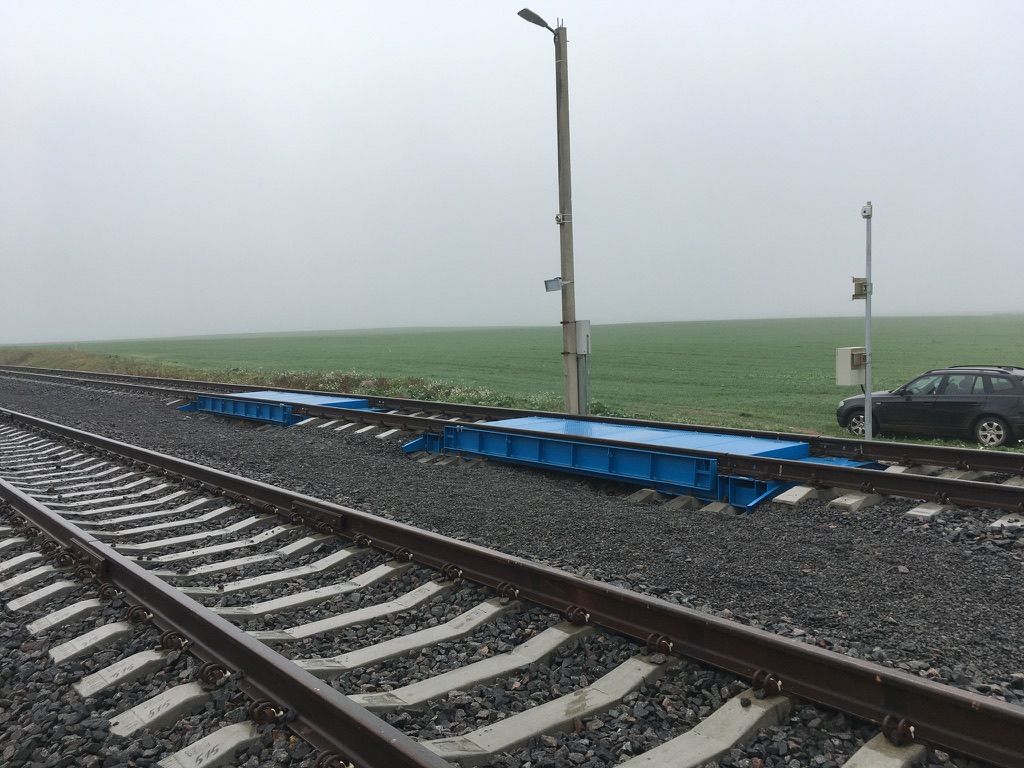
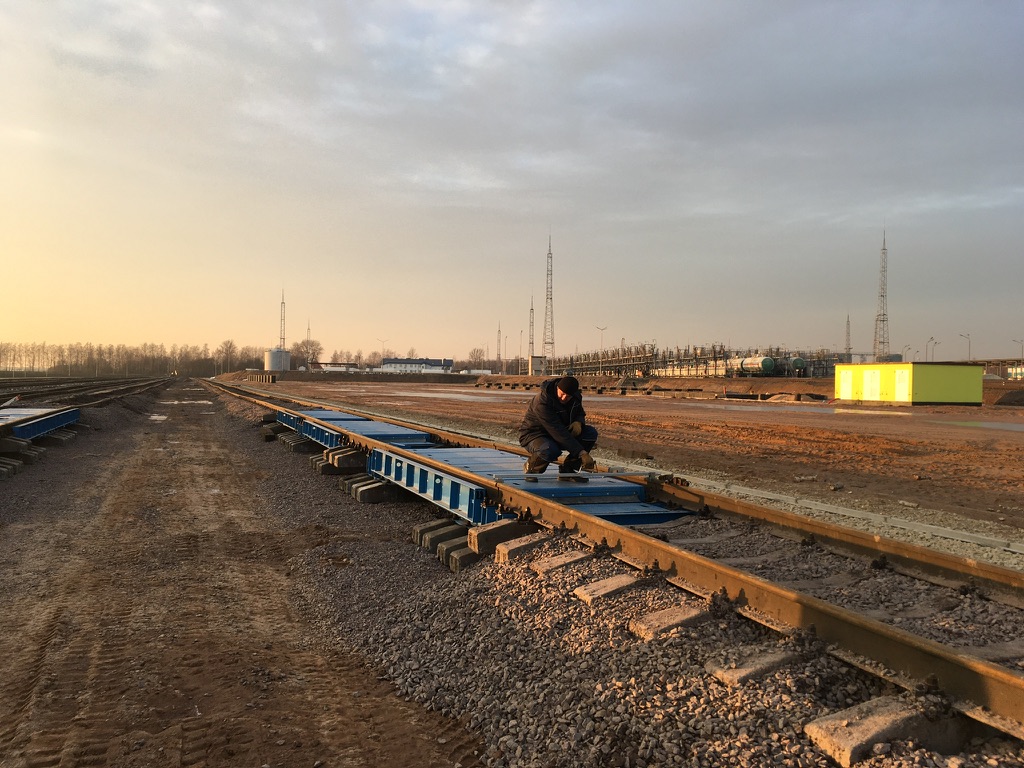
Modul railcar scales on site
Installed Modul railcar scales
Modul railcar scales with an approaching railcar
50+railcar-scale projects in Belarus
3 dayssupervised installation and commissioning of foundation-free scales
4customers have ordered scales from us again
Customer testimonials

What customers running Modul scales say

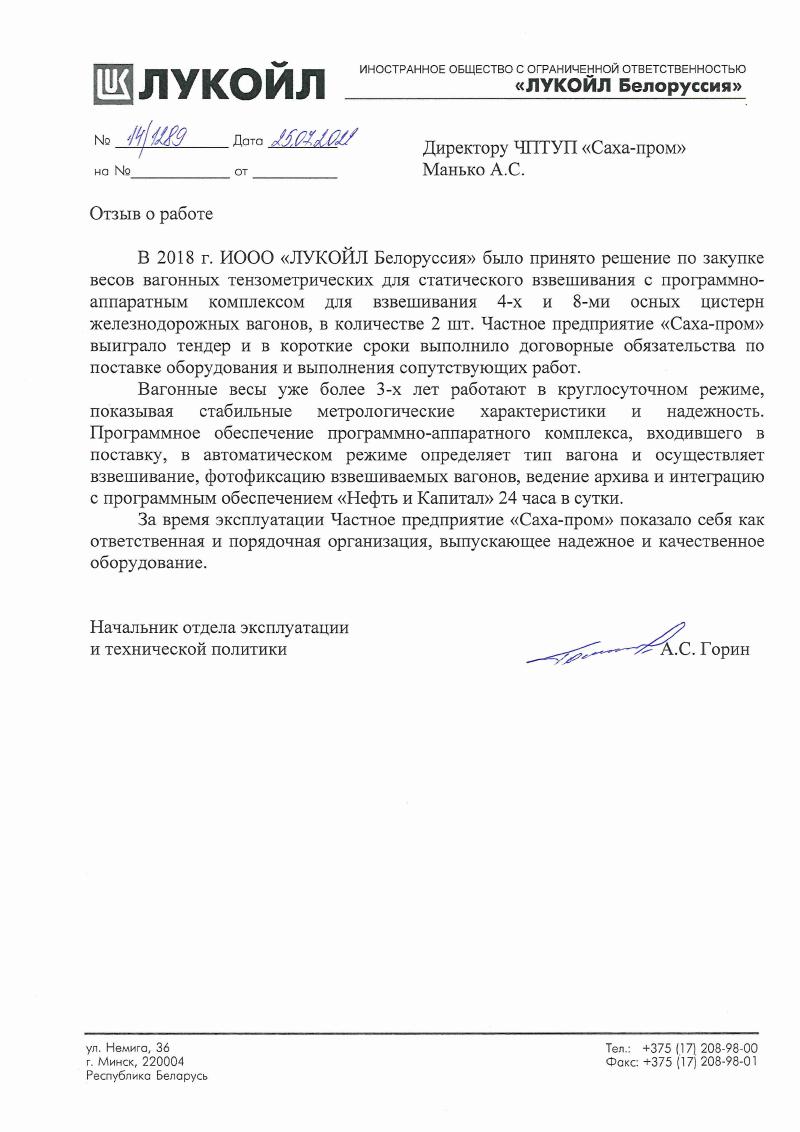
“The railcar scales have been in reliable round-the-clock service for more than three years, showing stable metrological performance.”
Lukoil-BelorussiaTwo scales for 4- and 8-axle tank cars, since 2018.
Open the letter (PDF) →
“The railcar scales passed verification at the Grodno testing centre. In subsequent operation, together with the software, they have proved to be modern, high-quality equipment that allows weighing at night without an operator present.”
Terminal ZapadTwo explosion-proof scales, Grodno gas-filling station, 2021.
Open the letter (PDF) →
“Over their working life the scales have proved reliable, high-quality and accurate, with stable metrological characteristics.”
AgroproduktWTS-2S scales since 2018. For new construction the company ordered new scales for 1520 mm and 1435 mm gauge.
Open the letter (PDF) →
“The railcar scales are verified every year and show high metrological performance, need no complicated maintenance and are easy to operate.”
Sergeevichskoe branch, MingazWTS-2SD scales and the automation system, 2018.
Open the letter (PDF) →
Repeat customers: Agroprodukt, Terminal Zapad, Oblrapsagroservice and Zhabinka Sugar Factory.

All testimonials →

Price

What the price is made of

Modul WTS scales cost more than simple ones, and that is a deliberate choice. We spend the money on what determines the accuracy and service life of the scales, not on what only shows on the price tag.

09Г2С steel

The load-bearing parts of the platforms are made of 09Г2С steel. It costs more than ordinary structural steel but copes well with frost and the constant load from railcars.

Shot blasting

Before painting, the platform is shot-blasted: paint goes onto clean metal and lasts longer.

A coating done properly

The scales stand outdoors beside the rails, so we treat painting seriously: a primer and a topcoat enamel, two coats each, film thickness not less than 140 µm.

Digital strain gauges with separate channels

Every load cell has its own channel: each one can be checked, the centre-of-gravity offset is measured and a faulty cell is found at once.

Free software, with number recognition

The PC software is supplied free of charge, with no licences or subscription, and recognises railcar numbers (when cameras are installed).

Quality service

After the warranty Sakha-prom takes over service support for the scales: verification, diagnostics and repair.

Software adapted to the customer

We adapt the software to your tasks and accounting system — at Lukoil-Belorussia, for example, it is integrated with the Neft i Kapital system.

The result

You pay for scales built to work for years without weight disputes, not for the cheapest possible build.

How to choose

How they differ from cheaper scales

Questions worth asking any railcar-scale supplier — including us.

Question to the supplierThe risk if the answer is “no”Modul WTS
Who designs and builds the scales, electronics and software?Responsibility is spread between suppliers: when something fails, each points at the other.Everything under one roof: we design and build the steel structure, electronics, weight terminal and software ourselves; only the load cell is bought in. Our quality management system is certified to STB ISO 9001-2015.
Does every load cell have its own channel and diagnostics?A faulty load cell cannot be found, and the load's centre-of-gravity offset cannot be measured.Every load cell has its own channel and ADC, and each one is diagnosed separately. Customer letter →
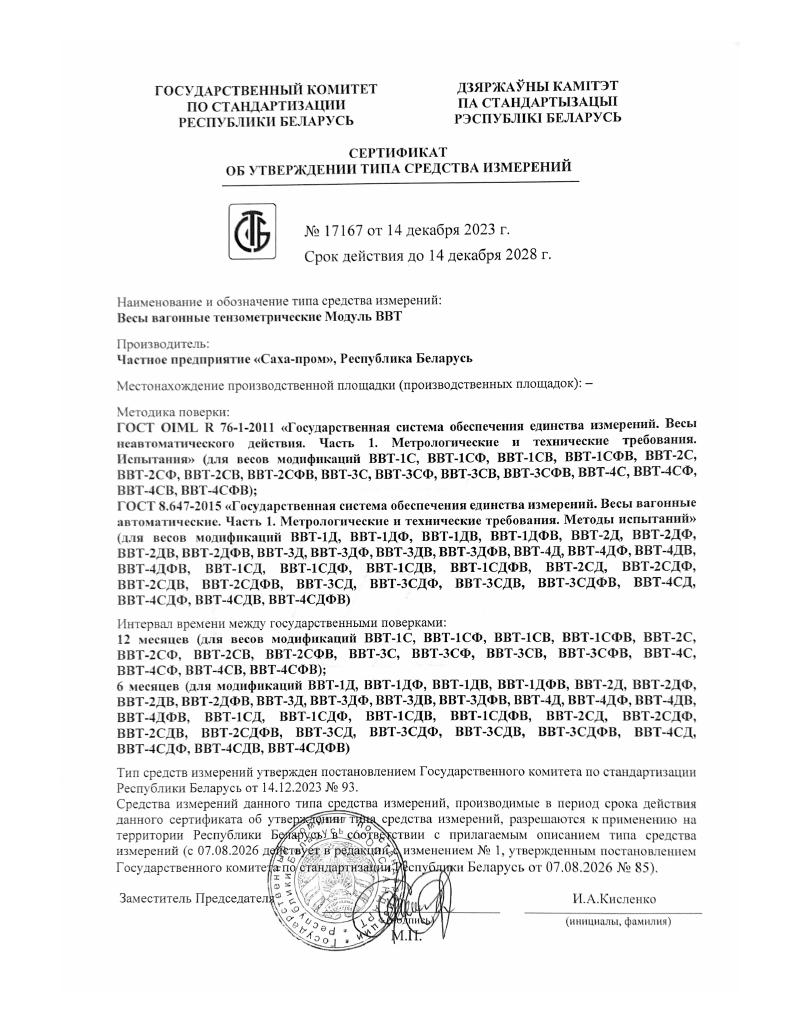
Are the scales type-approved, and who presents them to the verifier?The scales cannot be used for commercial accounting, and hand-over drags on.Type approval certificate No. 17167 is valid to 14.12.2028; we present the scales for initial verification. Certificate →
How do the scales cope with track settlement?Accuracy drifts and the track needs frequent tamping.Metrological performance holds with track settlement of up to 3 cm; no ballast tamping is needed within normal track maintenance limits.
What steel is the platform made of, and how is it protected from corrosion?The platform rusts and needs repair and repainting after a few years.09Г2С steel, shot blasting before painting, a primer and a topcoat enamel, two coats each (film not less than 140 µm).
Who is responsible for installation, and what happens after the warranty?Installation “as it goes”, and after the warranty you have no service and no way to adapt the software.We take on supervised installation, commissioning, training and hand-over. 24-month warranty, then service; the PC software is free and adapted to your tasks.

The full list of criteria is in the article “How to choose railcar scales” →

Model range

Which scales you need

Every model weighs at standstill and on the move (3–10 km/h, transit speed up to 12 km/h), in both directions.

ModelConfigurationWhen to choose itDrawing
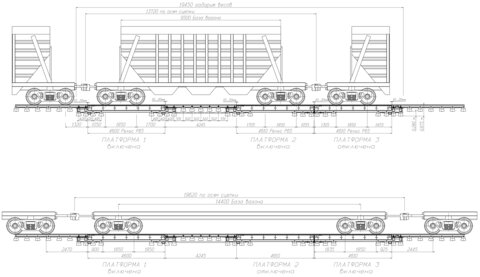
WTS-2SDWTS-2SD2 platformsThe most common version, designed for four-axle cars of similar dimensions.Layout drawing WTS-2SD
WTS-3SDWTS-3SD3 platformsA mixed fleet of four-axle cars: weighing without uncoupling.Layout drawing WTS-3SD
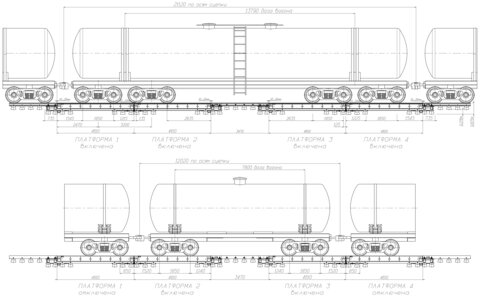
WTS-4SDWTS-4SD4 platformsThe entire fleet, including eight-axle tank cars, bulk and liquid cargo — without uncoupling.Layout drawing WTS-4SD

How to read the WTS-XSDVF code: X is the number of platforms (2…4), S is static, D is dynamic (in-motion), V is the explosion-proof version and F is the foundation-mounted version. Letters V and F appear only on those versions.

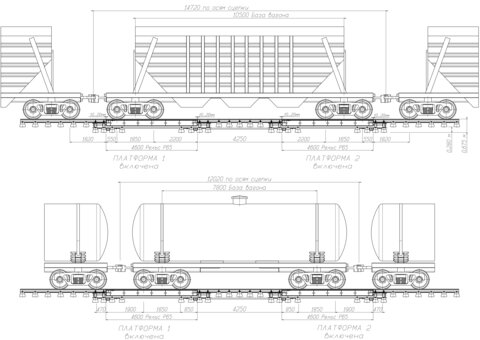
Not sure how many platforms your cars need? The interactive “Railcar positioning” diagram shows where the wheels will stand.
Open the calculator →  ·  How to choose railcar scales →
Advantages

Six reasons to choose Modul WTS railcar scales

Static and in-motion on one set of scales

Commercial accuracy at standstill and high-throughput weighing on the move at up to 12 km/h: ±0.5% at verification.

Any railcar — no uncoupling

The scales are assembled from platform modules and suit cars of different types — 4-, 6- and 8-axle, with different wheelbases. Three- and four-platform versions are available for tank cars and mixed fleets.

Tolerant of track settlement

Metrological performance holds with track settlement of up to 3 cm; no ballast tamping is needed within normal track maintenance limits.

Digital strain-gauge system

A dedicated channel per load cell and diagnostics of each one, temperature compensation, and a digital signal carried up to 1200 m without electromagnetic interference.

Centre of gravity and safety

The longitudinal and lateral offset of the load's centre of gravity matters as much as its weight for the safe carriage of cargo by rail.

Automation and loading by weight

The automation system adds unattended weighing, photo and video logging, number recognition and automated loading of a car to a target weight.

Weighing automation →

Production

How we build the platforms

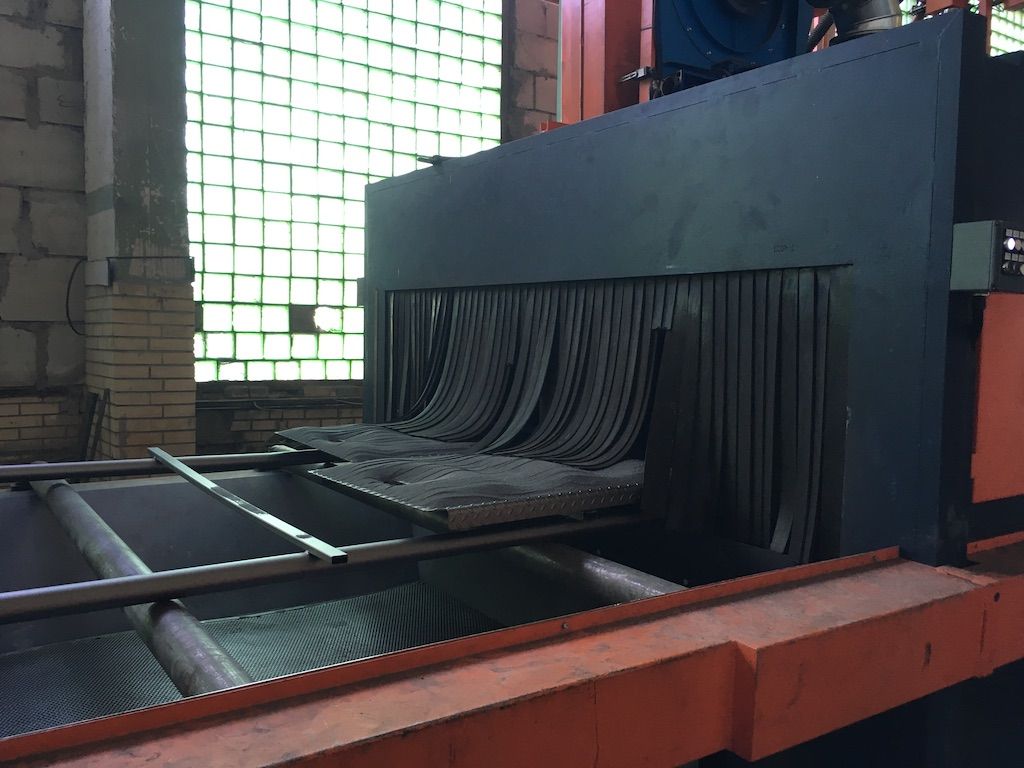
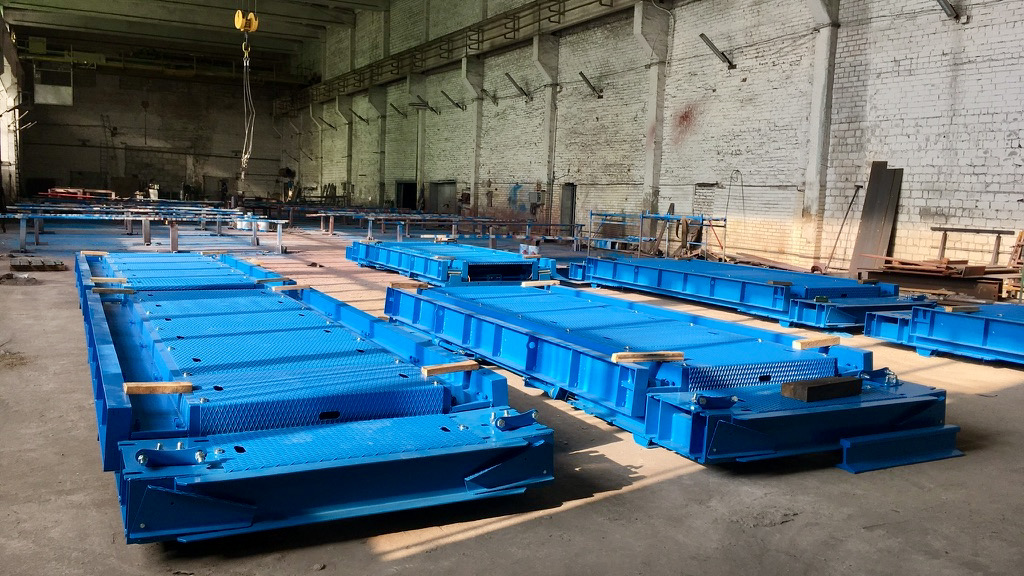
The quality of the scales is built in at the factory: tooling, machining, assembly and testing — before the platform reaches the track.

  1. Tooling of our own designThe platforms are built on special tooling we developed ourselves.
  2. Laser cuttingPlatform parts are laser-cut with accuracy down to fractions of a millimetre.
  3. Rail marking done at the factoryThe rail layout is set with a railway gauge in the workshop — on site the platform only has to be installed.
  4. Fasteners without compromiseGrade 10.9 bolts, lubricated threads and Nord-Lock washers — the details that decide whether the scales stay tight under the wagons.
  5. Assembly and testing before shipmentWe assemble the platforms, connect the equipment and test it before it goes to the customer.
Case studies

How it works for customers

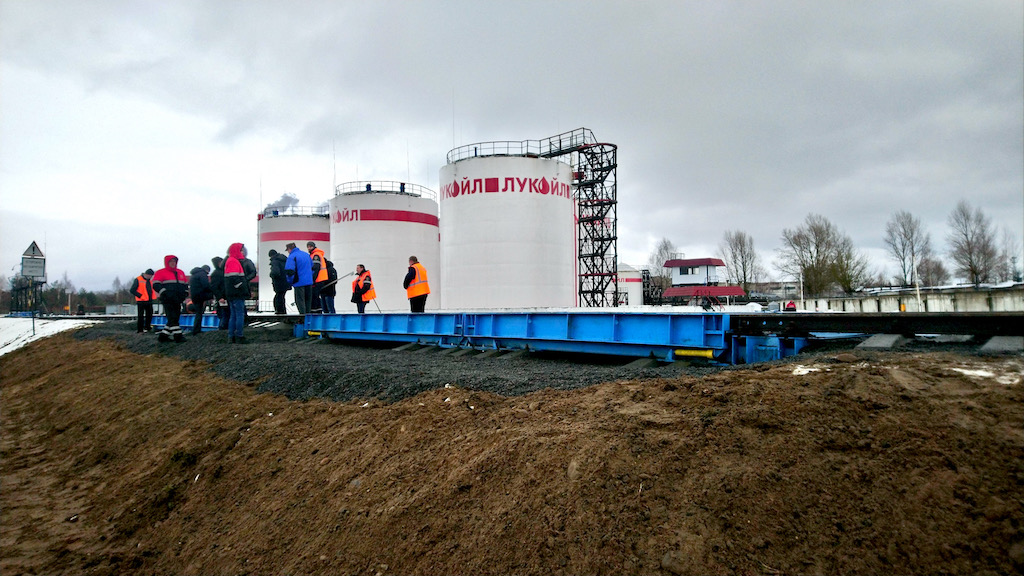
Lukoil-Belorussia: a round-the-clock tank-car weighing point

Lukoil-Belorussia: a round-the-clock tank-car weighing point

Task
In 2018 the company decided to install railcar scales with the automation system for 4- and 8-axle tank cars — two sets.
Solution
Sakha-prom won the tender and delivered the equipment and related works quickly. The software identifies the railcar type, weighs it, takes photos, keeps the archive and works with the Neft i Kapital system.
Result
The scales have been in round-the-clock service for more than three years with stable metrological performance.

Open the letter (PDF) →

Terminal Zapad: night-time weighing without an operator

Terminal Zapad: night-time weighing without an operator

Task
Reconstruction of a gas-filling station in Grodno, 2021: explosion-proof railcar scales and weighing automation were needed.
Solution
We supplied two explosion-proof scales and the automation system: the software keeps automatic records and stores every weighing with photos in the database.
Result
The scales passed verification at the Grodno testing centre and allow weighing at night without an operator. The company later ordered scales from us again.

Open the letter (PDF) →

Installation

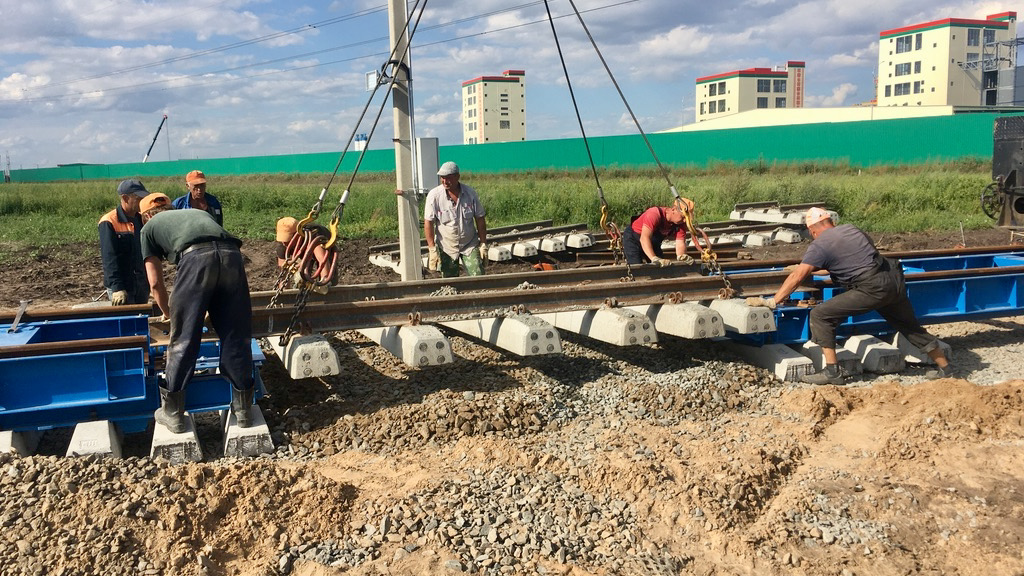
Installation: supervised installation and commissioning of foundation-free scales take 3 days

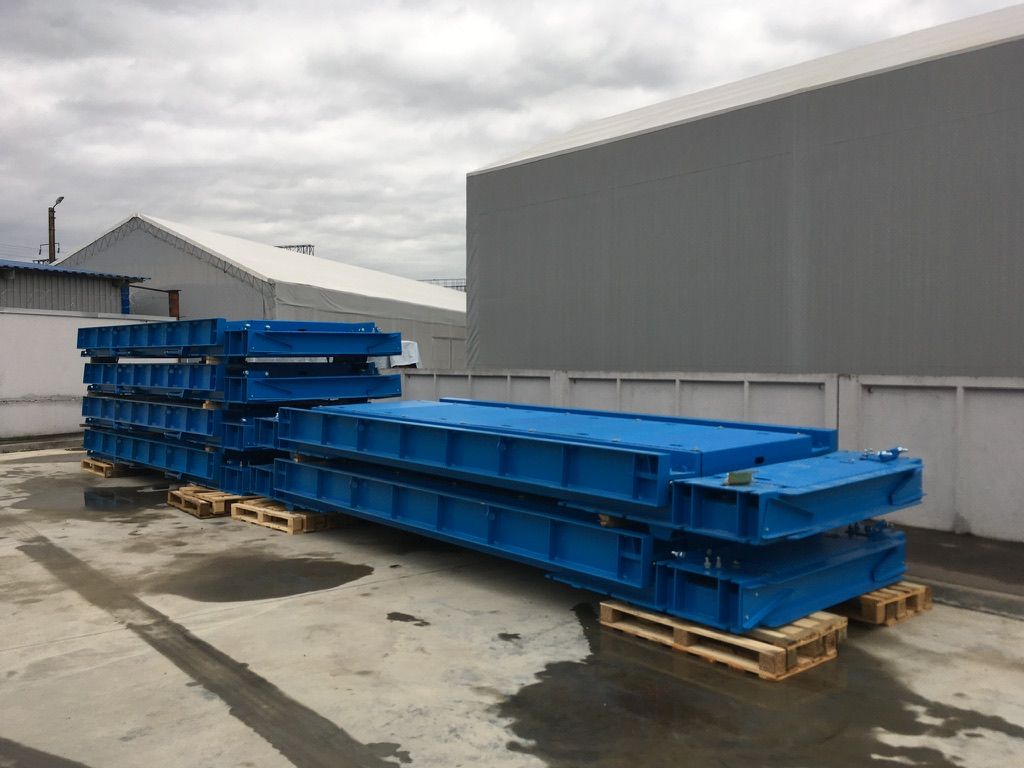
The scales arrive on site assembled with the load cells already fitted; in the foundation-free version they sit on reinforced-concrete sleepers.

What Sakha-prom does

The Supplier's work and documentation are included in the equipment price.

  1. Supervised installation and commissioningOur specialists direct the installation and start the scales up on site.
  2. Operator trainingWe show the staff how to use the scales and the software.
  3. Hand-over to the verifierWe present the scales for initial verification; the customer calls and pays for the verification railcar.

Installation instruction →

What the customer prepares

The list is confirmed against the project and the customer's requirements.

  1. Design and permitDesign documentation agreed with Belarusian Railway, and a permit for the works.
  2. Track worksRemoving the track, installing the scales, restoring the track and handing the section back to Belarusian Railway.
  3. Electrical380 V at the platform location (for the verification railcar), a cable to the operator room, 220 V and lighting.
  4. Equipment and materialsA foundation (for the foundation-mounted version), a crane and earthmoving equipment for the duration of the works, rails and fasteners.

Approach tracks: a straight section of at least 25 m on each side of the scales (down to one railcar length by agreement with the railway), 1520 mm gauge. Full requirements are in the questionnaire.

Video and photos

What it looks like on site

What is inside

The parts of the scales

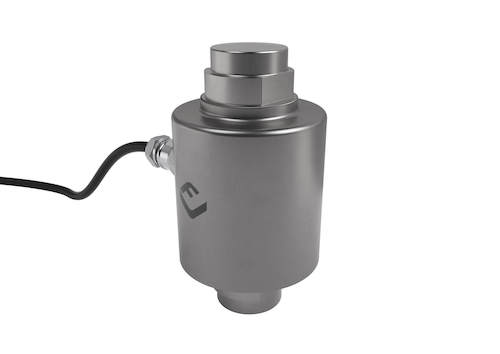
Strain-gauge load cells, measuring controllers inside the platforms, the WT-01L weight terminal and buffer stops. The automation system is an option: a cabinet with a switch, the operator's computer, cameras and an LED display for the shunter.

Strain-gauge load cells

Strain-gauge load cells

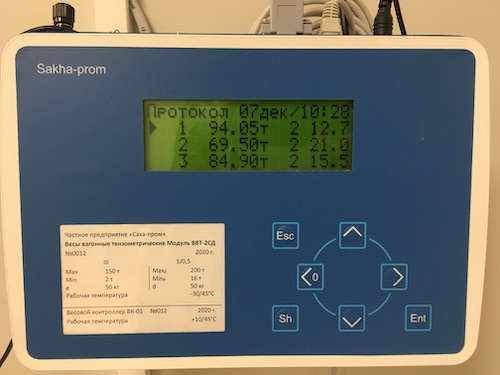
WT-01L weight terminal

WT-01L weight terminal

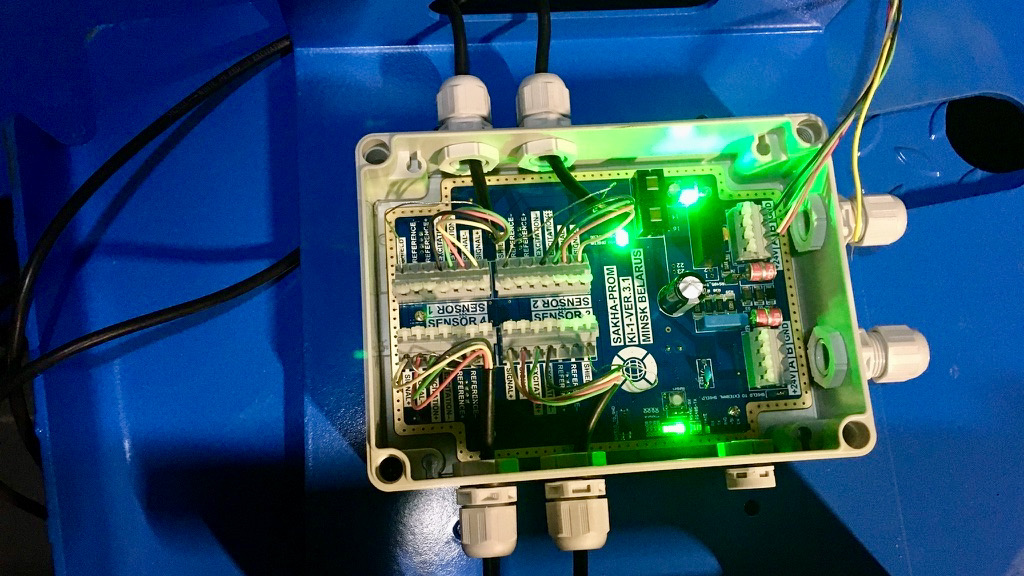
Measuring controller

Measuring controller

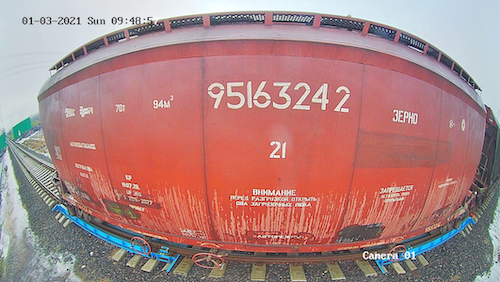
Wide-angle camera

Wide-angle camera

Buffer stop

Buffer stop

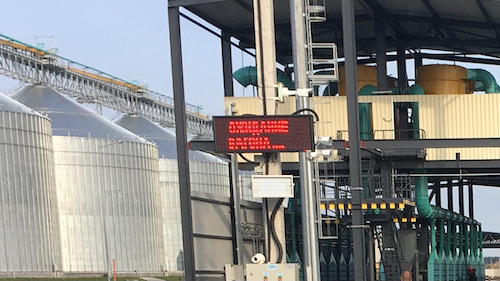
LED weight display

LED weight display

The automation system, cameras and LED display are options: the scales work without them.
Weighing automation →  ·  Electronics →
Metrology

Technical and metrological data

  • Maximum capacity: up to 200 t, static
  • Minimum capacity: 2 t
  • Accuracy class: medium
  • Scale interval d and verification interval e: 20 or 50 kg
  • Verification interval in special mode: 1 kg
  • Static error per GOST OIML R76-1-2011
  • In-motion error per GOST 8.647-2015
  • Verification interval: 12 months for “S” versions, 6 months for versions with “D”
  • Weighing speed: 3–10 km/h; transit speed up to 12 km/h
  • Cargo type: bulk and liquid
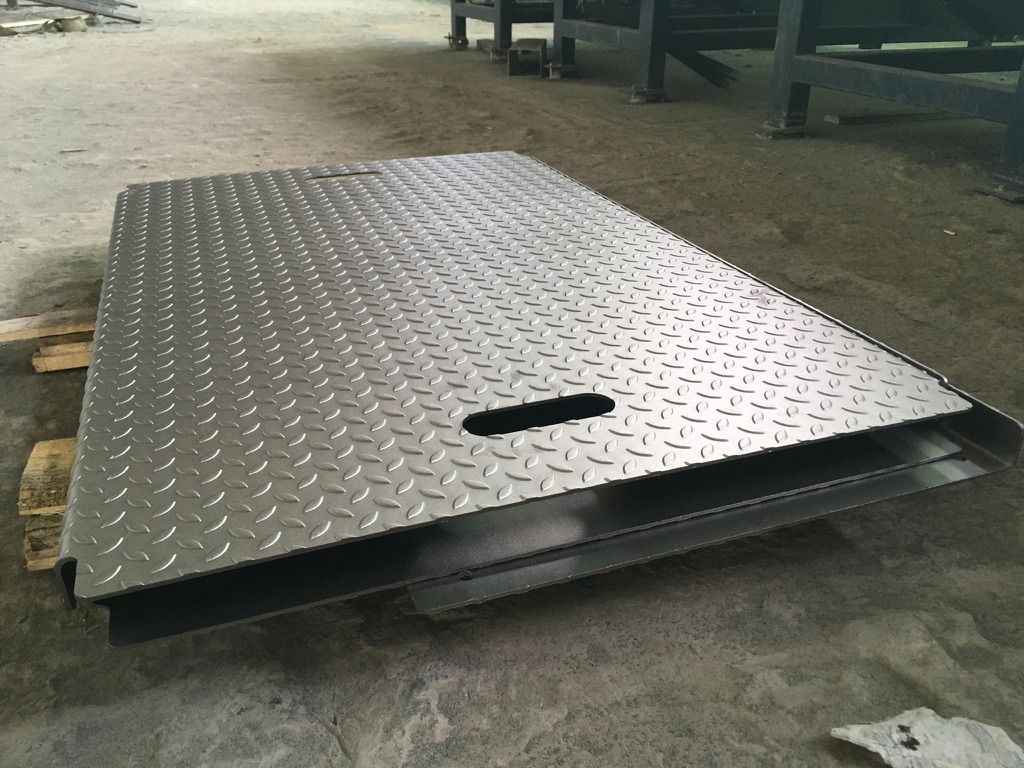
  • Platform dimensions: up to 6.16 × 2.2 × 0.46 m; measuring section 4.57 m long
  • Weight of two modules: up to 7.0 t
  • Structural steel: 09Г2С
  • Operating temperature: -40…+45 °C, extendable on request
  • Power supply: 100–240 V, 49–51 Hz, up to 20 VA
  • Probability of failure-free operation over 2000 h: 0,98

The platform can sit up to 1200 m from the weight controller; the signal is digital; every load cell has its own channel with individual temperature compensation. More on the hardware on the Electronics page.

PC software and the Android app are supplied free of charge; unattended weighing, photo and video logging and number recognition are covered on the Weighing automation and AI camera pages.

Documents

Certificates and declarations

Click an image to inspect the document, or open the PDF.

Type approval certificate

Type approval certificate

No. 17167 of 14.12.2023, valid to 14.12.2028. Modul WTS strain-gauge railcar scales, State Committee for Standardisation of Belarus.

Open PDF →
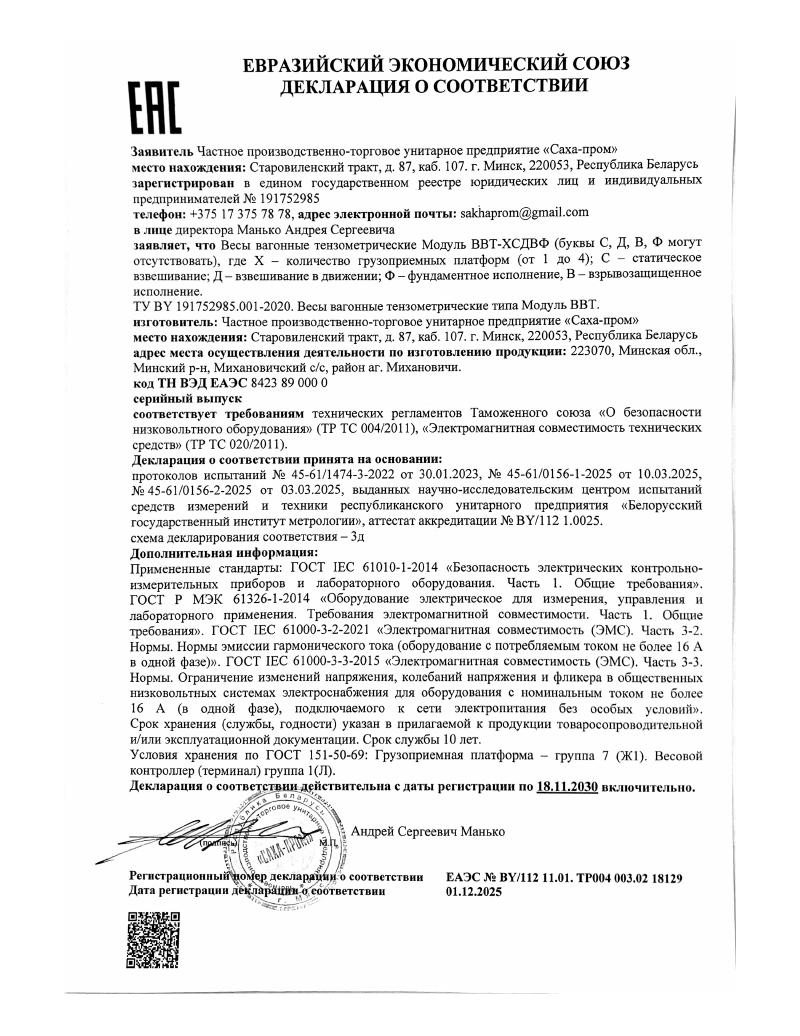
EAEU declaration of conformity

EAEU declaration of conformity

No. BY/112 11.01. TR004 003.02 18129 of 01.12.2025, valid to 18.11.2030. TR CU 004/2011 and TR CU 020/2011.

Open PDF →
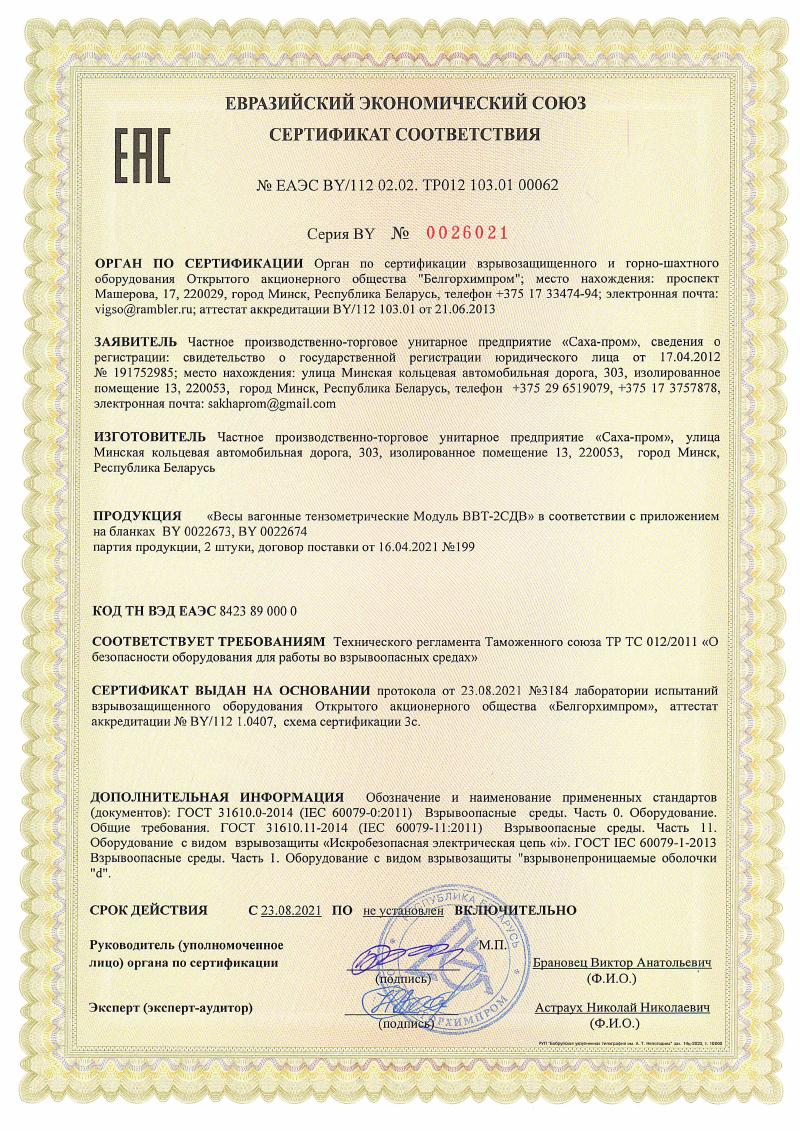
Certificate: explosion-proof version

Certificate: explosion-proof version

No. EAEU BY/112 02.02. TR012 103.01 00062. Modul WTS-2SDV under TR CU 012/2011 — equipment for explosive atmospheres.

Open PDF →
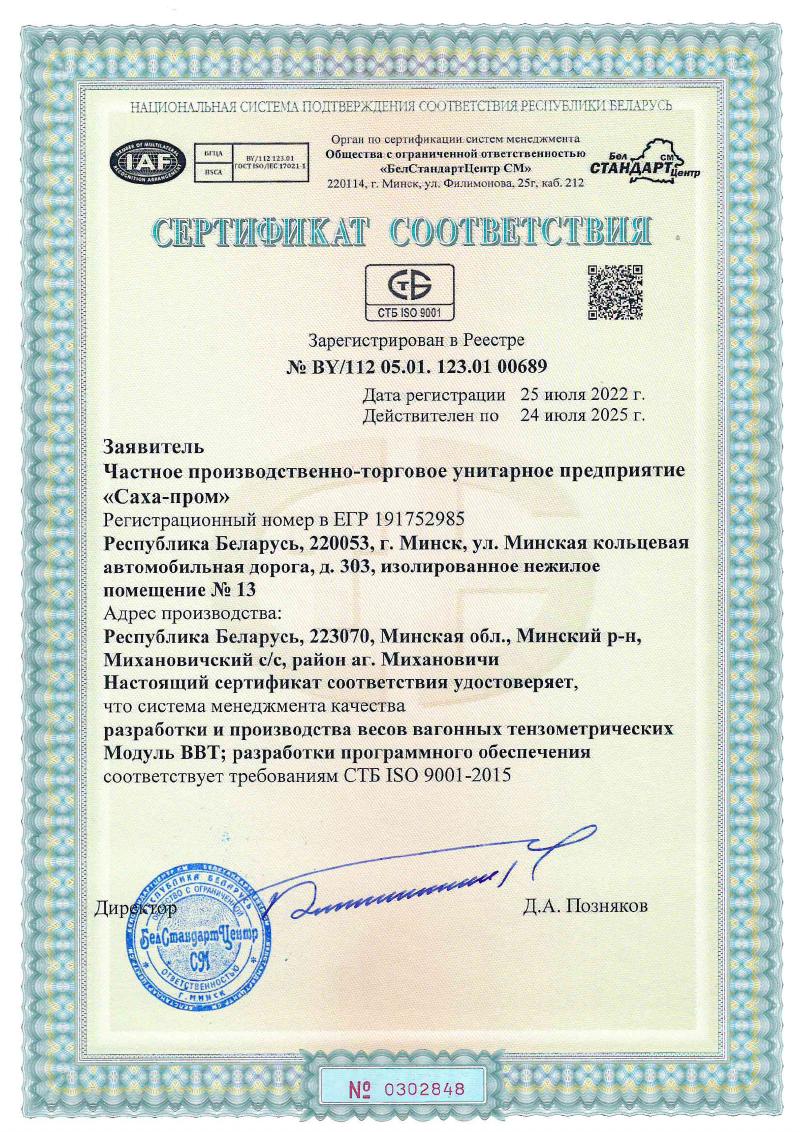
STB ISO 9001-2015 (QMS)

STB ISO 9001-2015 (QMS)

No. BY/112 05.01.123.01 00689 of 25.07.2022. Quality management system for the design and manufacture of scales and software.

Open PDF →

Regulatory basis: TU BY 191752985.001–2020 (Modul WTS strain-gauge railcar scales), GOST OIML R 76-1-2011, GOST 8.647-2015.

References

Modul scales at work

From two-platform static scales to four-platform scales for 8-axle tank cars.

2025

Vitebskagroprodukt

Two-platform static scales

2024

Remput, Belarusian Railway

Two-platform scales for static and in-motion weighing, bulk materials

2021–2024

Terminal Zapad

Scales for liquefied-gas railcars, including two explosion-proof scales

Testimonial (PDF) →
2021

HS Belakon

Two-platform static and in-motion scales, 1435 mm European gauge

2020–2021

Belarusian National Biotechnology Corporation

Four static and in-motion scales, two of them with four platforms

2020

Oblrapsagroservice

Additional railcar scales; more than ten years of cooperation

Testimonial (PDF) →
2019

Chess-Bel

Scales with 3 and 4 platforms for oil-product railcars of different wheelbases, including in-motion weighing of liquids

Testimonial (PDF) →
2018

Lukoil-Belorussia

Two four-platform scales for 4- and 8-axle oil-product tank cars

Testimonial (PDF) →

All projects →

Supply terms

What you get, and when

The price is set from the questionnaire — it depends on the model, version and scope of supply.

Delivery: 40–90 days

Equipment is delivered to the buyer's warehouse within 40–90 calendar days.

Installation: 3 days

Supervised installation and commissioning of foundation-free scales take 3 days from delivery and notice that the site is ready.

Warranty: 24 months

After the warranty Sakha-prom provides service support. Details →

Payment: 50 / 45 / 5

50% advance after the contract is signed, 45% after shipment, 5% after the completion certificate is signed.

Questions and answers

Frequently asked questions

Why do your scales cost more than others on the market?

We spend the money on what determines accuracy and service life: 09Г2С steel, shot blasting and a two-coat finish, digital strain gauges with a separate channel for every load cell, our own electronics and software, supervised installation, hand-over to the verifier and service after the warranty. More in the “What the price is made of” section.

Is a foundation needed?

Most of our scales are foundation-free and are installed on reinforced-concrete sleepers. Where a site requires it, we also build scales for installation on a foundation (version F); in that case the customer prepares the foundation.

How long does installation take?

Supervised installation and commissioning of foundation-free scales take 3 days from delivery and notice that the site is ready. The customer carries out the track works; their duration depends on approvals from the railway. For other models and versions the time is confirmed from the questionnaire.

How often is verification needed?

The verification interval is 12 months for “S” versions and 6 months for versions with “D”. On commissioning we present the scales to the state verifier; the customer calls and pays for the verification railcar.

Which model should I choose?

Two platforms are the most common version, for four-axle cars of similar dimensions; three suit a mixed fleet of four-axle cars; four cover the entire fleet, including eight-axle tank cars. The exact choice depends on your cars and track — the questionnaire helps to make it.

What is the in-motion error?

The in-motion error is set by GOST 8.647-2015. Weighing speed is 3–10 km/h, transit speed up to 12 km/h.

Is there a version for explosive atmospheres?

Yes, an explosion-proof version (V) is available: the Modul WTS-2SDV holds a certificate under TR CU 012/2011.

Which track gauge are the scales made for?

1520 mm. Scales have also been supplied for 1435 mm European gauge (HS Belakon, Agroprodukt).

Do such scales pay back?

It depends on the value of your cargo, the number of railcars and your operating mode: every disputed delivery and every track closure costs money. We will discuss it when preparing the offer from your questionnaire.

What if we need service or changes to the software?

After the warranty Sakha-prom takes over service support for the scales, and we adapt the software to the customer's requests.

Let's discuss your project

Describe the task: your railcar fleet, track and operating mode. From the questionnaire we will choose the model and scope of supply and prepare a commercial offer.

Download the questionnaireWhatsAppViber+375 (29) 651-90-79

or send the completed questionnaire to sakhaprom@gmail.com